In the ever-evolving world of packaging and protective solutions, Plastic Film Rolls have emerged as a vital component across various industries. Renowned industry expert Dr. Sarah Thompson, a leading figure in packaging innovations, asserts, "The versatility of Plastic Film Rolls not only enhances product protection but also significantly contributes to sustainability efforts." This statement encapsulates the growing recognition of Plastic Film Rolls as essential tools for both efficient distribution and environmental responsibility.
From agriculture to food preservation, the applications of Plastic Film Rolls are extensive and diverse. Their lightweight, durable nature allows for efficient packaging that safeguards products against environmental factors, ultimately extending shelf life and reducing waste. As businesses increasingly prioritize sustainability, the adaptability of these film rolls supports their commitment to eco-friendly practices while meeting consumer demands for quality and safety.
In this article, we will explore the top ten uses of Plastic Film Rolls, highlighting how they provide significant advantages in packaging and protection. By understanding these applications, businesses can better leverage Plastic Film Rolls to enhance their operations and promote a greener future.
Plastic film rolls have become indispensable in the packaging industry due to their versatility and protective qualities.
Primarily made from polyethylene and other plastic materials, these rolls provide excellent clarity and moisture resistance, making them suitable for a wide range of applications. Their lightweight nature ensures that products are not only well-protected but also economically packaged, reducing shipping costs and environmental impact.
Additionally, the durability of plastic film rolls minimizes the risk of damage during transit, offering peace of mind to manufacturers and consumers alike.
When selecting plastic film rolls for packaging, several key characteristics should be considered.
The gauge or thickness of the film impacts its strength and flexibility; thinner films are often used for lighter products, while thicker films provide enhanced protection for heavier items.
Another critical factor is the film's stretchability, which can be crucial for securing products tightly without compromising the integrity of the packaging.
Tips: Always conduct a test run with your chosen film to ensure compatibility with your packaging machinery and desired outcomes.
Furthermore, consider the environmental impact of your choices and explore options for recyclable or biodegradable films.
This approach not only aligns with sustainability efforts but also appeals to eco-conscious consumers.
Plastic film rolls have become indispensable across various industries due to their versatility and protective qualities. In the food industry, for instance, plastic film rolls are commonly used to wrap and seal products, extending shelf life while preserving freshness. This is crucial not only for packaged foods but also for bulk items, where exposure to air and contaminants is minimized, ensuring safety and quality. Additionally, the ability of plastic films to resist moisture and oxygen permeation makes them ideal for vacuum packaging, a method widely adopted to enhance food preservation.
In the manufacturing sector, plastic film rolls serve multiple purposes from protecting fragile components during shipping to providing a barrier against dust and moisture on production lines. These films can be tailored in thickness and material, making them suitable for various applications, including pallet wrapping and bundling products together. Furthermore, in the construction industry, plastic film is used for vapor barriers and insulation, playing a key role in improving energy efficiency and protecting structural integrity. The adaptability and effectiveness of plastic film rolls make them a crucial resource across these diverse fields, highlighting their essential role in packaging and protection solutions.
When it comes to packaging and protecting products, plastic film rolls are an invaluable resource. Their lightweight nature and superior flexibility make them ideal for safeguarding a wide range of items, from fragile electronics to bulk materials. One of the key benefits of using plastic film rolls is their ability to provide a moisture-resistant barrier, which helps preserve the integrity of the products inside. This is particularly beneficial for items sensitive to humidity and moisture, ensuring they remain in perfect condition during storage and transport.
Moreover, plastic film rolls can be customized to fit specific needs, including varying thicknesses and widths. This adaptability allows for creative packaging solutions that can enhance product durability while also optimizing storage space. The ease of application further increases efficiency in packaging processes, whether in a high-volume production facility or a small business.
Tips: When selecting plastic film rolls for your packaging needs, consider the specific environmental conditions your products will face. For added protection, opt for thicker films that provide better shielding against physical damage. Additionally, ensure proper sealing techniques to maximize the longevity and effectiveness of the packaging.
| Use Case | Description | Benefits | Common Industries |
|---|---|---|---|
| Shrink Wrapping | A method of packaging using heat to shrink the plastic film around a product. | Provides a tamper-proof seal and protects products from dust, moisture, and scratches. | Food, Electronics |
| Stretch Film | A highly stretchable plastic film used to wrap products on pallets. | Ensures stable loads and protects against contamination. | Logistics, Warehousing |
| Bubble Wrap | Plastic film with air-filled bubbles for cushioning fragile items. | Provides excellent protection against shock and impact. | Shipping, Retail |
| Pallet Covers | Large plastic sheets used to cover and protect palletized products. | Protects products from dust, dirt, and moisture. | Manufacturing, Agriculture |
| Food Wrap | Plastic film used to cover food items for storage. | Prevents spoilage and maintains freshness. | Food Service, Household |
| Static Cling Film | Film that adheres to surfaces without adhesive, often used for window covering. | Easy application and repositioning without residue. | Retail, Events |
| Bubble Film Sheets | Individual sheets of bubble wrap for ease of use. | Convenient for packing and protecting various items. | E-commerce, Shipping |
| Shrink Bags | Bags that shrink closely around the product when heated. | Ideal for displaying products while providing a tight seal. | Retail, Preservation |
| Anti-Static Film | Film designed to prevent static electricity buildup. | Protects sensitive electronic components during storage and transport. | Electronics, Manufacturing |
| Insulated Film | Specialized film that provides insulation properties. | Maintains temperature control for sensitive items. | Food, Pharmaceuticals |
The growing concern over plastic waste has prompted a significant shift towards eco-friendly alternatives to traditional plastic film rolls in packaging. According to a report by Smithers Pira, the global market for sustainable packaging is projected to reach $500 billion by 2027, fueled by consumer demand for environmentally responsible options. Biodegradable and recyclable materials, such as compostable film made from plant-based polymers, are gaining traction as viable substitutes. These materials not only reduce landfill waste but also offer similar protective qualities to conventional plastic films, ensuring product integrity during transit and storage.
Additionally, advancements in technology are enabling the development of innovative packaging solutions that incorporate recycled content. A survey by the Flexible Packaging Association found that 57% of companies are now investing in sustainable packaging technologies, emphasizing the industry's commitment to reducing plastic pollution. The use of recycled polyethylene (rPE) in film production can significantly minimize carbon footprints, aligning with global sustainability goals. As consumers become more environmentally conscious, businesses are finding that adopting eco-friendly film alternatives not only meets regulatory standards but also enhances brand loyalty and contributes positively to corporate social responsibility initiatives.
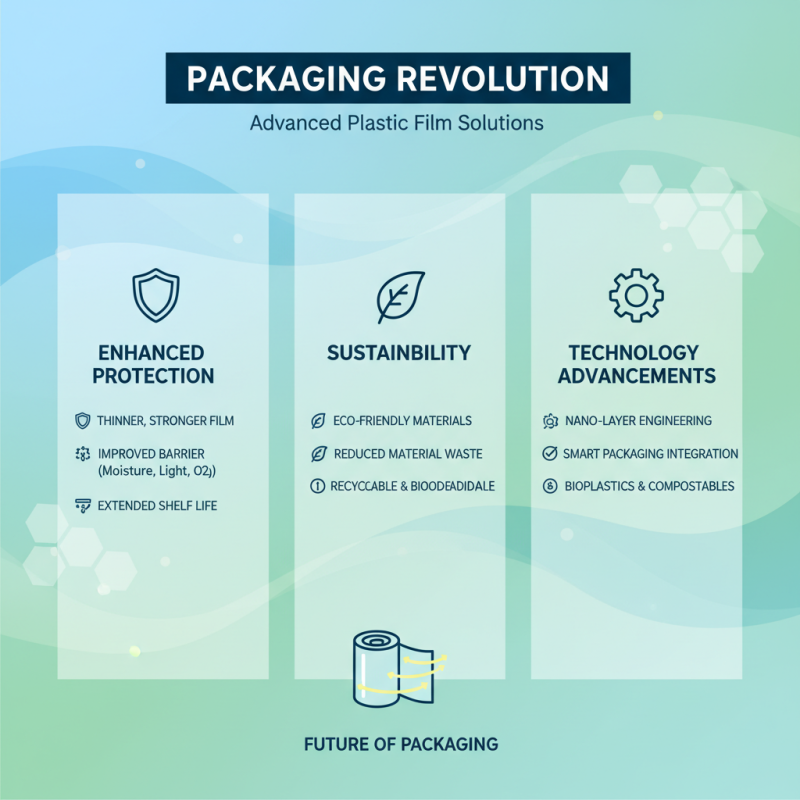
The landscape of packaging solutions has dramatically evolved with the advent of innovative plastic film technology. These advancements have not only enhanced the protective capabilities of film rolls but have also introduced sustainable practices into their production processes. Modern plastic films are engineered to be thinner yet stronger, providing improved barrier properties against moisture, light, and oxygen, which are crucial for extending the shelf life of various products.
One notable innovation is the development of biodegradable plastic films made from renewable resources. This technology is particularly important as it helps in addressing environmental concerns associated with traditional plastics. Moreover, the use of co-extrusion techniques allows manufacturers to combine multiple layers of materials, each with specific beneficial properties, resulting in packaging that is tailored to meet diverse industry needs while minimizing waste.
Tips: When selecting plastic film rolls for packaging, consider the specific requirements of your products. Look for films with enhanced puncture resistance and tailored barrier properties that match your storage and transportation conditions. Additionally, explore options that offer eco-friendly materials, as this can significantly improve your brand's environmental impact while appealing to eco-conscious consumers.